

As healthcare professionals are being groomed in an atmosphere where everything revolves around care and a healthy lifestyle, patients’ perspective is often overestimated. Patients are people, and people have different interests and do different things for a living.
When a person encounters a disease and consults a doctor, there is a high chance that the person does not know the cause or even about the disease. This makes it difficult for the providers to explain their condition and engage them in their healthcare.
To tackle this rising problem with high patients in chronic care management programs in general, the role of care managers or chronic care coordinators has taken center stage.
But what exactly is a care manager? Let’s find that out in this blog!

What is a Care Manager?
In simple words, a care manager is the connecting link between providers and patients. They act as a companion of the patients during their care journey. Over the course of time, care managers have become a crucial part of the success of many healthcare programs. Since they act as the main point of contact between patients and providers, they play a crucial role in patient engagement and improving patient outcomes.
Traditionally, doctors were the care managers for patients, but the growing burden of healthcare providers made it necessary to have a separate healthcare professional as a care manager. Today, care managers are responsible for assessing the patient’s needs and ensuring that they are met, whether that be physical, cognitive, or even emotional.
Becoming an integral part of the healthcare system, they are now found in almost every healthcare setting, from hospitals and nursing homes to assisted living facilities.
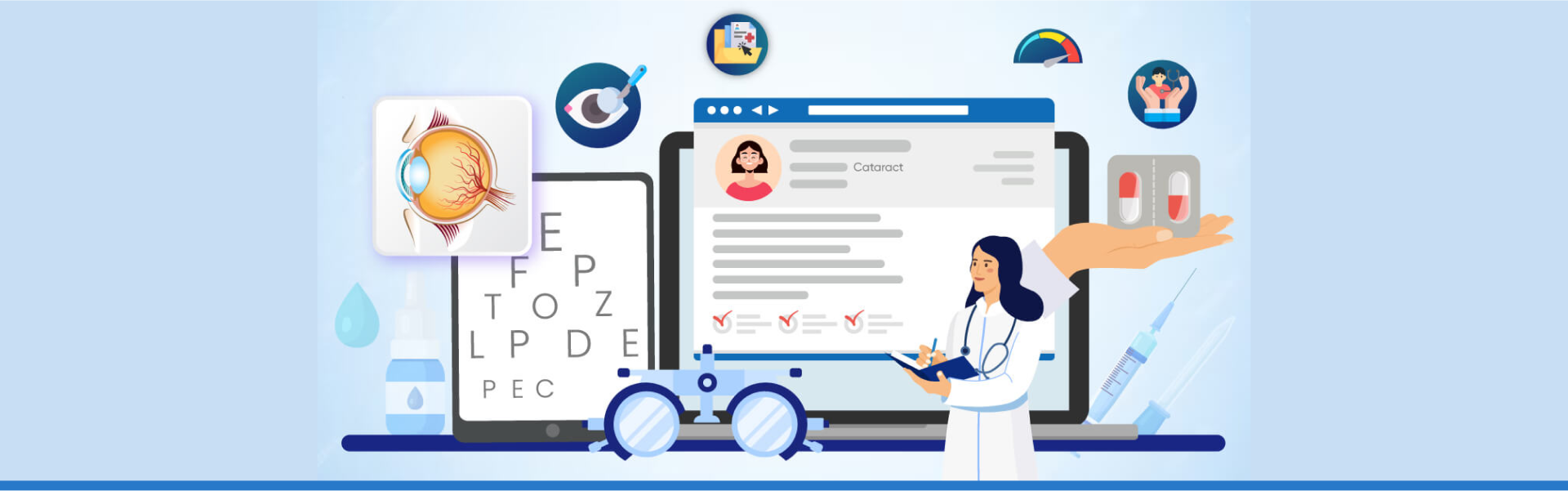
In ophthalmology, lense inventory management, surgical note preparation, and imaging patient records are the most critical factors. EMR Software offers these features, which makes work easy for care providers. It helps to reduce the human error count. That will help provide high-quality care to patients. Using EMR software effectively will result in a high rate of patient satisfaction.
Roles and Responsibilities
1. Streamlined Digital Workflow
A Ophthalmologists need to stay up-to-date on the latest healthcare technology as it will help them provide better care to patients on time. Specialized health care has a different functionality than regular health care. EMR offers basic and advanced features that are useful for day-to-day activities in ophthalmology. EMR software offers tailored solutions for managing patient records, diagnostic images, and billing processes.
In ophthalmology, lense inventory management, surgical note preparation, and imaging patient records are the most critical factors. EMR Software offers these features, which makes work easy for care providers. It helps to reduce the human error count. That will help provide high-quality care to patients. Using EMR software effectively will result in a high rate of patient satisfaction.